
Ambulatory ECG recorder cable
Holter ECG Cable Manufacturer for Ambulatory Monitoring
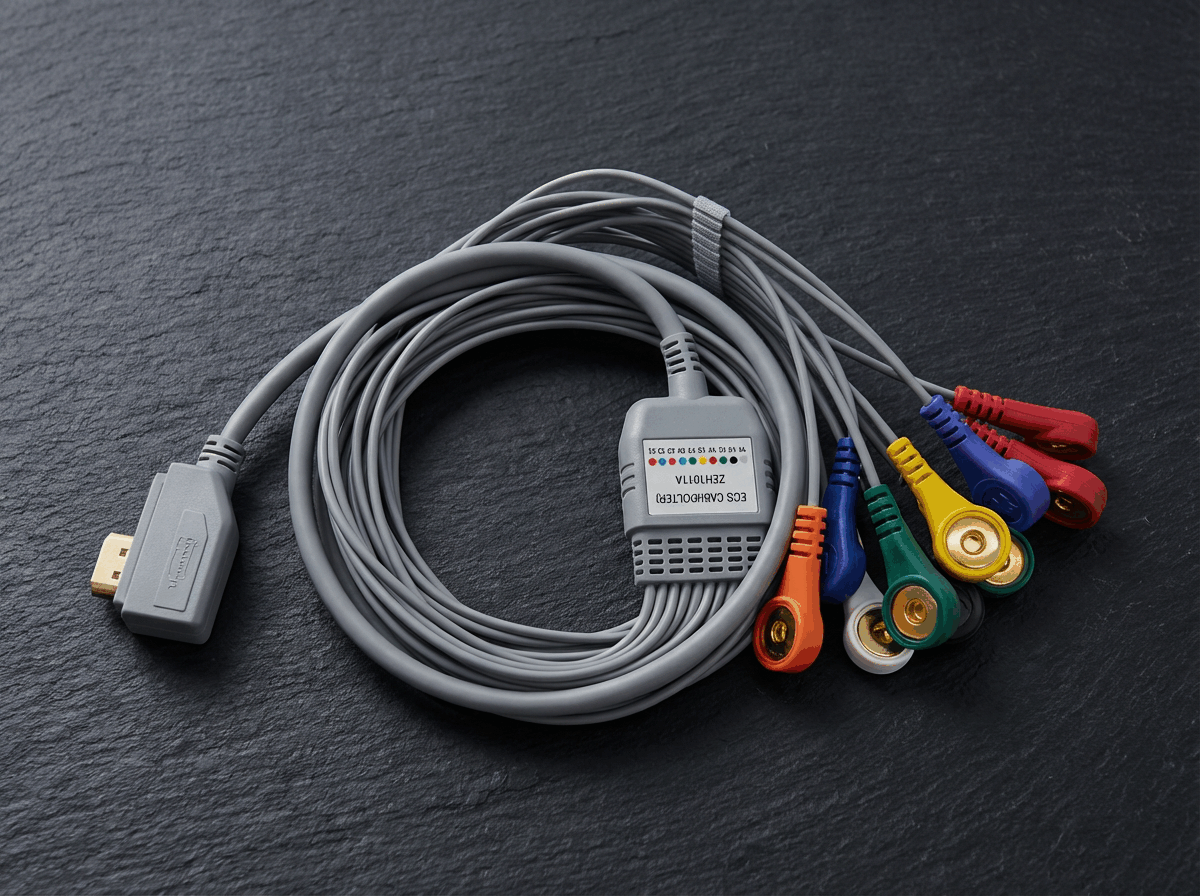
Custom Holter ECG cable assemblies connect compatible portable ECG recorders to patient electrodes during ambulatory recording. The recorder connector, pinout, lead configuration, electrode termination, cable length, material and labeling are defined for the target device and approved project specification.
- Recorder-specific connector and pinout
- Flexible patient-side leads for ambulatory use
- Custom lead configuration, termination, length and labeling
Product definition
What Is a Holter ECG Cable?
A Holter ECG cable is a patient cable or leadwire assembly that connects a portable Holter recorder to electrodes positioned on the patient for ambulatory ECG recording. Its interfaces and lead arrangement must match the exact recorder and electrode system.
Holter cables are used while the patient may be walking, sleeping or performing normal daily activities. Their design therefore gives particular attention to cable flexibility, movement-related electrical noise, connector retention, strain relief and practical patient-side lead routing.
Available configurations
Holter ECG Cable Configurations
Select the lead arrangement according to the target recorder, electrode placement and intended ambulatory recording protocol.
Configured for compatible portable recorders using a three-lead patient connection.
Supports expanded ambulatory recording configurations when specified by the target recorder.
A ten-electrode configuration may support 12-lead acquisition when required by the target system.
Lead count, channel assignment, branch structure and labels can be built to an approved device drawing.
Typical product data
Holter ECG Cable Specifications
Final electrical, mechanical and material values depend on the recorder interface, approved drawing and project-specific verification requirements.
| Product function | Connection between a compatible portable ECG recorder and patient electrodes for ambulatory recording |
|---|---|
| Lead configurations | 3-lead, 5-lead, 10-electrode or recorder-defined |
| Recorder interface | Model-specific or custom connector with an approved pinout |
| Electrode termination | Snap, tab, pin or another project-specific patient-side connector |
| Conductor construction | Stranded conductor configuration selected for the required flexibility and electrical performance |
| Cable jacket | TPU, TPE, silicone or another project-approved material |
| Shielding | Project-specific unshielded, foil, braided or combined construction where required |
| Color coding | AHA, IEC or device-specific |
| Cable and branch lengths | Configured to the approved recorder and patient-use specification |
| Electrical verification | Continuity, pinout, insulation and other acceptance criteria defined by project documentation |
Design priorities
Holter ECG Cable Design for Ambulatory Signal Stability
Movement-Noise Control
Conductor construction, insulation, core arrangement and optional shielding can be selected to help control movement-related electrical noise during ambulatory recording.
Lightweight Flexible Leads
Cable dimensions, branch lengths and jacket materials are selected according to the electrical, mechanical and patient-use requirements of the recorder system.
Secure Recorder Interface
The device-side connector, retention method and strain relief are matched to the recorder so the cable remains connected during the intended recording workflow.
Patient-Side Lead Routing
Lead labels, color coding, electrode terminations and branch layout are defined for the intended electrode placement and cable-management method.
Device integration
Holter ECG Cable Compatibility Is Recorder-Specific
Holter ECG cables are not universal. Compatibility depends on the recorder connector, pinout, lead configuration, electrode termination, color-coding standard and any device-specific identification components. A recorder brand name alone is not sufficient for selection.
JYCMED can review projects for portable ECG and Holter recording platforms when an exact recorder model, compatible part number, interface drawing or physical sample is supplied.
Third-party brand names are used only to describe potential compatibility references. Compatibility must be confirmed for the exact recorder model and interface before production.
OEM / ODM manufacturing
Custom Holter ECG Cable Manufacturing
JYCMED supports medical device manufacturers and distributors with recorder-interface review, cable-structure selection, connector matching, sample verification and controlled production. The final construction is documented in an approved drawing or specification before mass production.
Quality control
Holter ECG Cable Production and Verification
- ISO 13485 quality-management production environment
- Incoming material and connector inspection
- Assembly according to controlled work instructions
- Continuity, pinout and insulation verification
- Visual, dimensional and workmanship inspection
- Production records and lot traceability
Test items, acceptance criteria and material-compliance requirements are defined by the approved project documentation and customer specification. Supplier material documentation is available in the JYCMED resources center.
Buyer questions
Holter ECG Cable FAQs
What is a Holter ECG cable?
It is a cable or leadwire assembly that connects a portable Holter recorder to patient electrodes for ambulatory ECG recording.
How is a Holter ECG cable different from a bedside ECG cable?
A Holter cable is configured for a portable recorder and ambulatory use. A bedside ECG cable is configured for a stationary or multi-parameter patient monitor. Their connectors, pinouts, lead arrangements and mechanical requirements may differ.
Are Holter ECG cables universal?
No. The recorder connector, pinout, lead configuration, electrode termination and color standard must match the exact Holter recorder and intended electrode arrangement.
Which information is needed to identify a compatible Holter cable?
Provide the recorder manufacturer and model, compatible part number, connector photos or drawing, pinout, lead configuration, electrode termination and required cable length.
Can the connector, cable length, material and lead layout be customized?
Yes. These items can be configured to an approved OEM drawing, subject to interface review, material selection and project-specific verification.
How is a Holter ECG cable project verified before production?
Verification can include connector and pinout checks, electrical continuity, insulation, dimensional inspection, workmanship review and other tests defined by the approved project specification.