What Is an ECG Leadwire and Why It Matters in Signal Integrity?
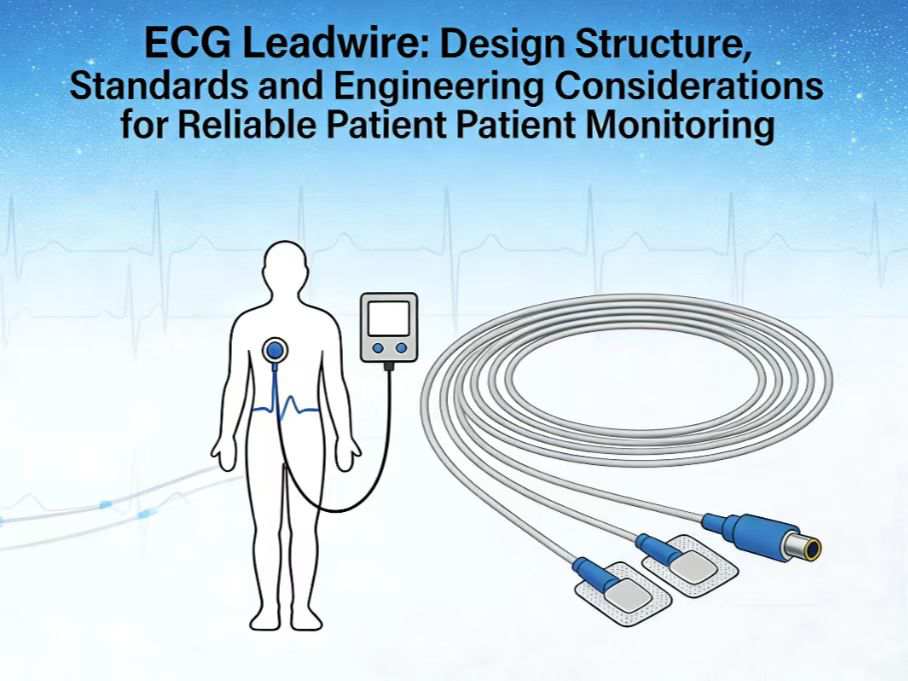
An ECG leadwire is the patient-side cable assembly that connects electrodes to an ECG trunk cable or directly to a monitoring device.
While often considered a simple accessory, the ECG leadwire plays a critical role in signal integrity, motion artifact control, and long-term durability.
In a standard monitoring system, the signal path is:
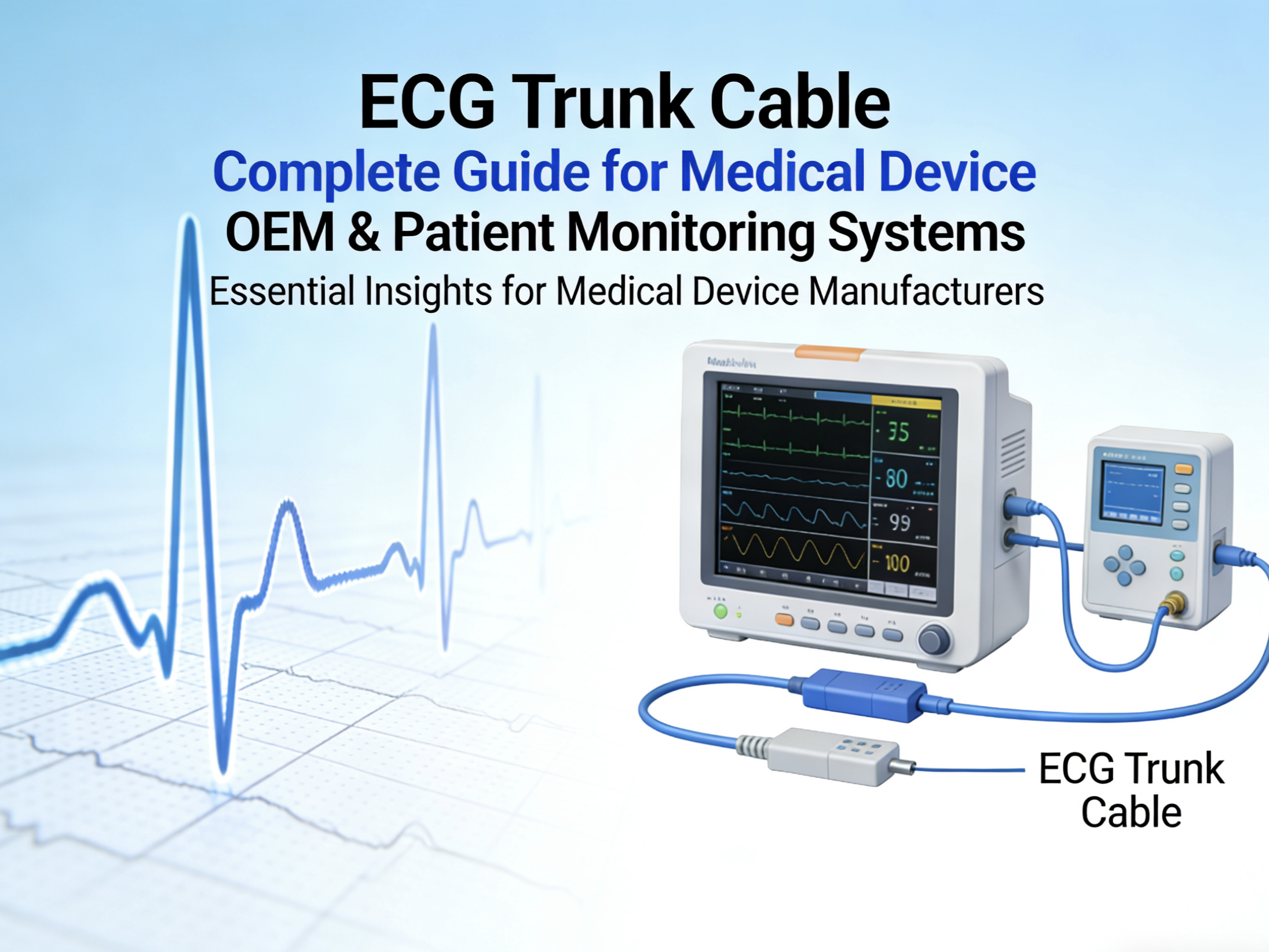
Monitor → Trunk Cable → ECG Leadwire → Electrode → Patient
Any instability in conductor resistance, shielding structure, or connector contact can directly affect waveform clarity. For medical device OEMs, ECG leadwire design is not just a mechanical connection — it is an integral part of the signal transmission system.
ECG Leadwire Structure: From Conductor to Patient Connector
Understanding the internal structure of an ECG leadwire helps engineers evaluate performance beyond surface appearance.
Conductor Selection and Resistance Balance
Common conductor materials for ECG leadwires:
- Tinned copper
- Silver-plated copper
Conductor resistance consistency across all leads is essential. Unbalanced resistance may cause waveform distortion or baseline drift, especially in 5-lead or 10-lead ECG systems.
Silver-plated copper is often preferred in high-precision reusable ECG leadwire designs due to its improved conductivity stability.
Shielding Structure and EMI Protection
Hospital environments contain multiple sources of electromagnetic interference (EMI). Typical shielding structures for ECG leadwires include:
- Spiral shielding
- Foil shielding
- Combination shielding layers
Effective shielding reduces noise from nearby medical equipment and improves the signal-to-noise ratio — this design element becomes increasingly critical for long cable assemblies.
Cable Jacket Material and Biocompatibility
ECG leadwire jackets are commonly made from three key materials, each with distinct benefits:
- TPU: Soft, flexible, and biocompatible
- PVC: Cost-effective, ideal for disposable ECG leadwires
- Silicone: High flexibility and enhanced durability
Material selection directly impacts:
- Patient comfort
- Cleaning compatibility
- Bending fatigue resistance
- Long-term aging performance
Reusable ECG leadwires typically require higher tear resistance and chemical tolerance from jacket materials.
Strain Relief and Mechanical Durability
Connector overmolding and strain relief design determine the long-term reliability of an ECG leadwire, as repeated bending near the electrode connector is one of the most common failure points.
High-quality ECG leadwire manufacturing includes rigorous mechanical testing:
- Pull-force testing
- Bending cycle testing
- Connector retention validation
ECG Leadwire Types: Snap, Clip, Pin and DIN Configurations
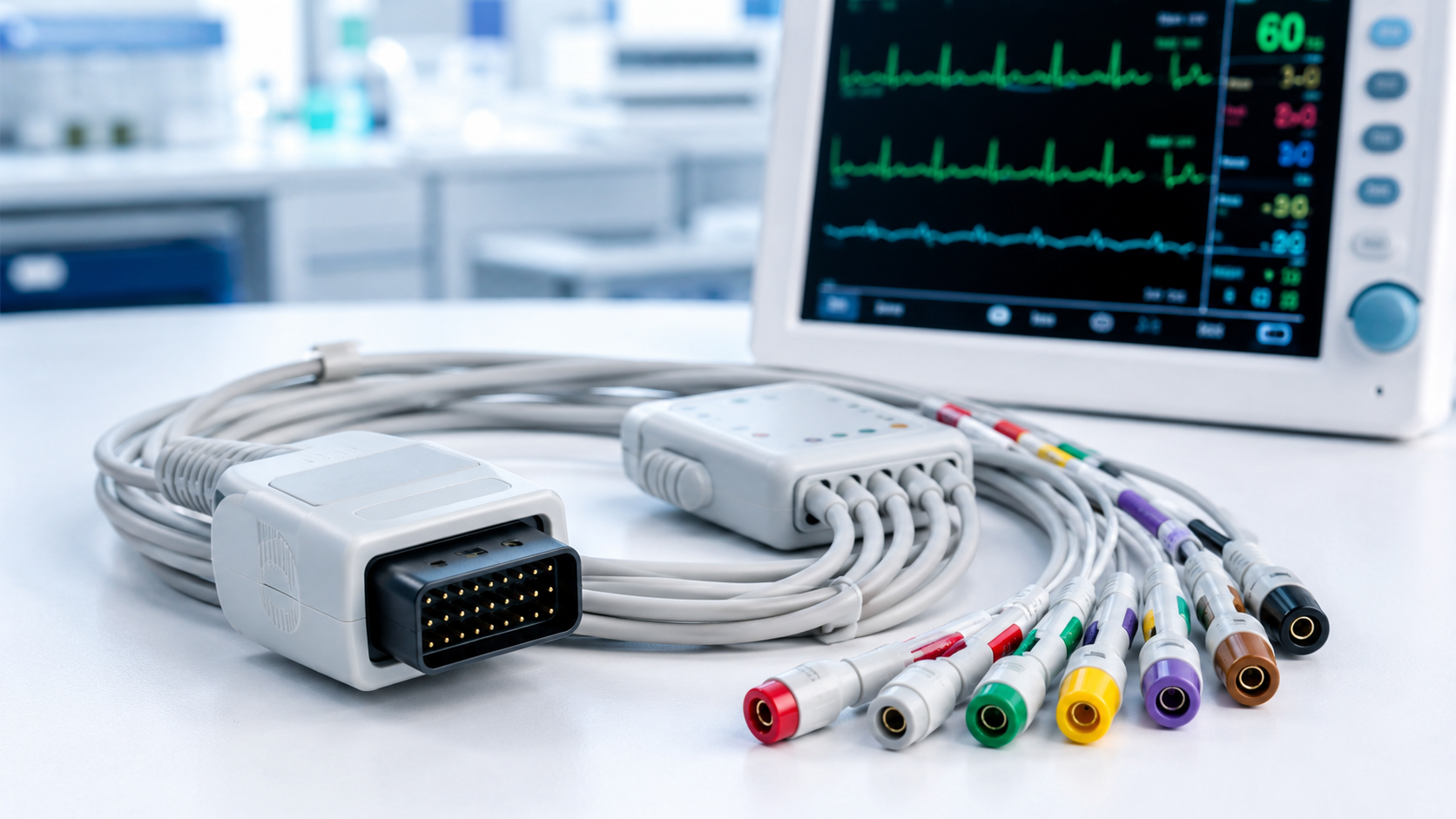
Different clinical monitoring systems require distinct electrode interfaces, with four primary ECG leadwire types available:
Snap ECG Leadwire
- Universal button-style connector
- Widely used in disposable electrode systems
- Standard for hospital patient monitoring
Clip Type ECG Leadwire
- Crocodile-style connector
- Often paired with reusable electrodes
- Flexible for stress testing or legacy monitoring systems
Pin / Banana Plug Leadwire
- Inserted directly into electrode sockets
- Provides stable mechanical retention
- Used in reusable ECG configurations
Selecting the correct interface ensures compatibility with the electrode type and regional market standards.
AHA vs IEC Color Coding: Compliance and Market Differences
ECG leadwires follow two primary international color coding standards, with regional adoption differences:
- AHA: Commonly used in the U.S.
- IEC: Commonly used in Europe and Asia
Differences in color mapping affect lead identification and clinical interpretation of ECG data. When developing ECG leadwire customization projects, confirming regional compliance is essential before mass production. OEM-defined color coding is also available for private brand monitoring systems.
Reusable vs Disposable ECG Leadwire: Engineering Trade-Off Analysis
Reusable ECG Leadwire
- Designed for repeated professional cleaning and disinfection
- Built with higher mechanical durability
- Lower long-term consumable cost for healthcare facilities
Disposable ECG Leadwire
- Eliminates cross-infection risk
- Features a lightweight structure
- Lower upfront unit cost
From a design perspective, disposable versions may use thinner conductors and simplified shielding, while reusable designs prioritize long-term mechanical strength and chemical resistance. The selection between the two depends on clinical workflow requirements and regulatory positioning.
How to Evaluate an ECG Leadwire Manufacturer for OEM Projects
For OEM medical device companies, evaluating an ECG leadwire manufacturer should extend far beyond price — focus on these critical capabilities:
- Conductor resistance control capability
- Shielding design expertise
- Connector molding precision
- 100% electrical continuity testing
- ISO 13485 compliant manufacturing system
- Full traceability and batch control
Early engineering collaboration with a manufacturer reduces redesign risk and ensures stable production during scale-up. A well-designed ECG leadwire directly contributes to monitoring reliability and a brand’s market reputation.
FAQ Section: Frequently Asked Questions About ECG Leadwire
1. What is the difference between an ECG leadwire and an ECG trunk cable?
An ECG leadwire connects directly to the electrode on the patient side, while an ECG trunk cable connects the leadwire assembly to the monitoring device.
Typical system path: Monitor → Trunk Cable → Leadwire → Electrode → Patient
Leadwires primarily affect patient-side signal stability and mechanical durability, whereas trunk cables focus on device interface compatibility.
2. What is the typical resistance of an ECG leadwire?
The electrical resistance depends on conductor material and cable length. For high-quality reusable ECG leadwires, resistance consistency across all leads is more important than the absolute resistance value — balanced resistance ensures waveform stability and reduces signal distortion. Manufacturers typically control conductor tolerance to maintain consistent ECG signal transmission.
3. What is the difference between AHA and IEC ECG leadwire color coding?
AHA and IEC are two international ECG color coding standards with distinct regional adoption:
- AHA: Commonly used in the United States
- IEC: Widely adopted in Europe and Asia
The core difference is the color assignment for each lead position. When sourcing custom ECG leadwires, confirming the required regional standard is essential.
4. Are ECG leadwires reusable or disposable?
ECG leadwires are available in both versions:
- Reusable: Designed for repeated cleaning/disinfection with higher mechanical durability
- Disposable: Lowers cross-infection risk, often used in sleep monitoring and short-term diagnostics
Selection depends on clinical workflow and regulatory requirements.
5. How long do reusable ECG leadwires typically last?
Service life is determined by these key factors:
- Cable jacket material
- Frequency of cleaning and disinfection
- Bending stress near connectors
- Pull-force resistance
High-quality reusable ECG leadwires with proper strain relief and reinforced overmolding can withstand repeated clinical use over extended periods. Regular inspection for insulation cracks or connector looseness is recommended.
6. What testing should be performed on ECG leadwires?
A reliable ECG leadwire manufacturer conducts comprehensive testing on all units:
- 100% electrical continuity testing
- Insulation resistance testing
- Pull-force testing
- Bending cycle testing
- Visual inspection for molding integrity
For OEM projects, test reports and traceability documentation are typically available under ISO 13485 manufacturing systems.
7. How do I choose the right ECG leadwire manufacturer?
When selecting a manufacturer for OEM ECG leadwire projects, prioritize these capabilities:
- Engineering support and customization capability
- Precise conductor resistance control
- Expertise in shielding structure design
- High-precision connector molding
- Full regulatory compliance (ISO 13485)
- Fast sample development speed
Early technical discussion with a manufacturer reduces project risk and improves long-term production stability.