What Is a Holter ECG Cable and How Is It Different from Standard ECG Cables?
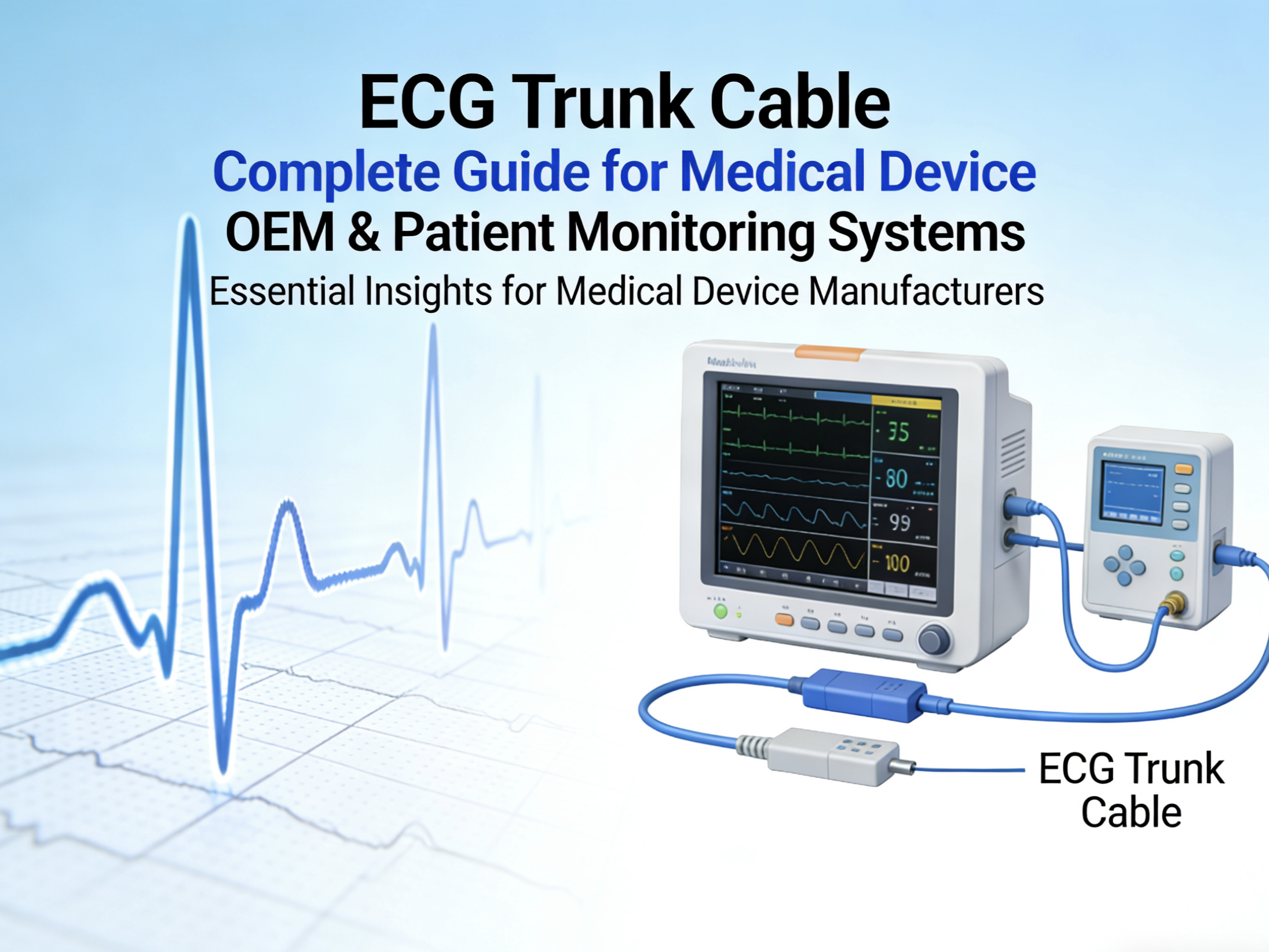
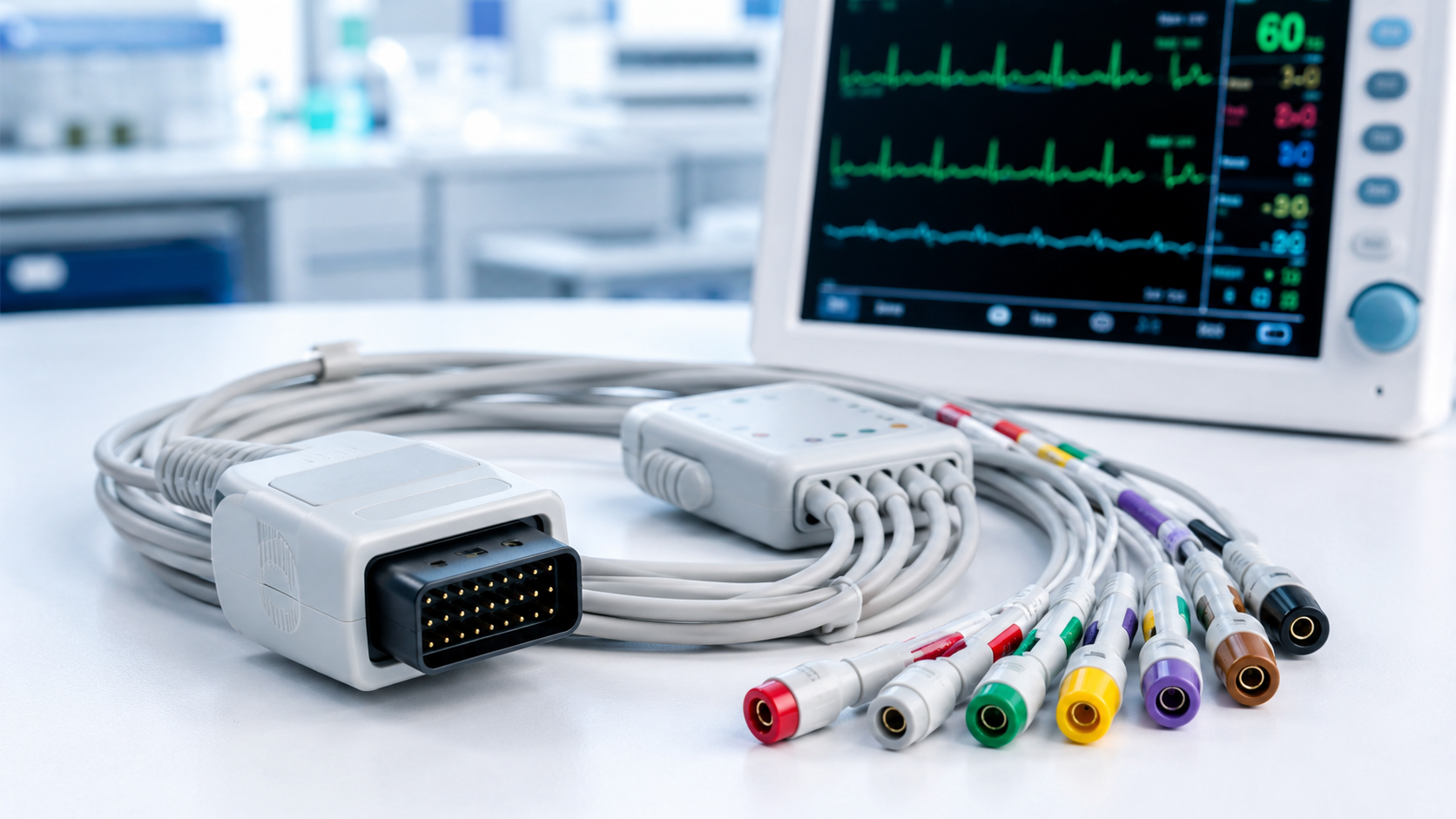
A Holter ECG cable is a patient cable assembly engineered for ambulatory ECG monitoring systems, used for 24–72 hour continuous cardiac recording—a stark contrast to bedside ECG trunk cables for ICU monitors.
It must perform reliably during everyday patient activities:
- Walking
- Routine daily activity
- Overnight sleep
The signal path in a portable Holter system is:
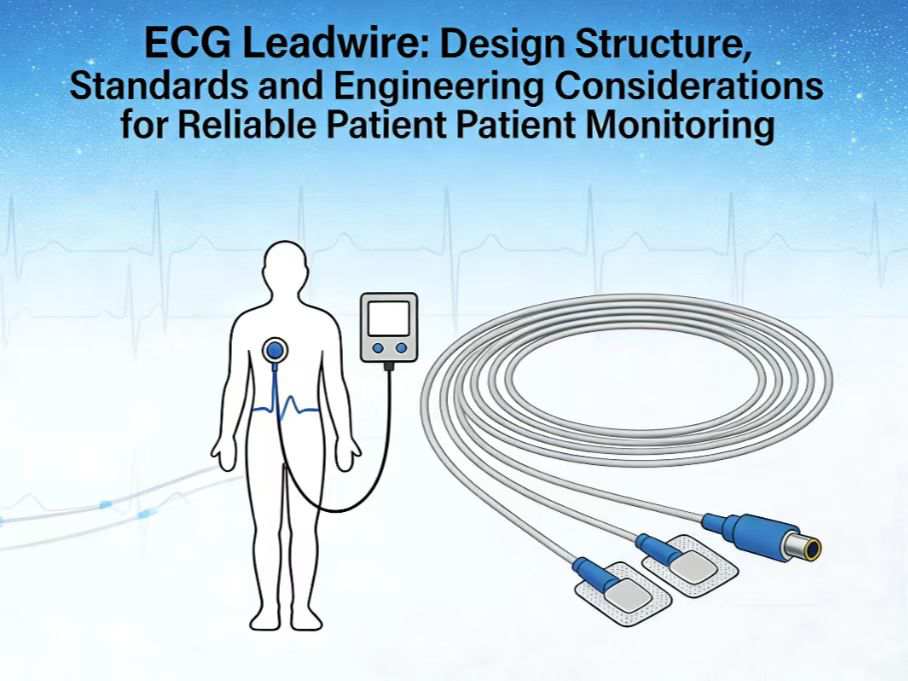
Holter recorder → Holter ECG leadwire → Electrodes → Patient
Since the recorder is worn on the body, cable flexibility, mechanical balance, and shielding performance directly impact signal quality—making Holter ECG cable design vastly different from standard ECG trunk cable assemblies.
Why Holter ECG Signal Noise Happens — Root Causes and Engineering Solutions
Signal noise is the top challenge in portable ECG monitoring, as these systems operate in unregulated real-world environments (not controlled hospital settings). Holter ECG signal noise stems from four primary sources, each with targeted engineering fixes:
1. Motion Artifact from Cable Movement
Patient movement triggers a chain of issues that cause noise, the most common culprit in sleep monitoring:
- Cable swing creates micro-pulls on electrodes
- Electrode-skin contact impedance fluctuates
- Sudden cable tension causes baseline wander
Engineering Solutions:
- Lightweight Holter ECG leadwire construction
- Optimized strain relief design
- Balanced cable weight distribution
- Enhanced flexibility to reduce electrode drag
Mechanical stability is just as critical as electrical performance for eliminating motion artifact.
2. Conductor Resistance Imbalance
Portable ECG systems mostly use 3-lead or 5-lead configurations, and resistance variation between channels leads to:
- Inconsistent signal amplitude
- More noticeable baseline drift
- Amplified noise in long-duration recordings
Manufacturing Control Measures:
- Tight conductor gauge tolerance
- Consistent silver-plated copper thickness
- Strict length uniformity during assembly
- 100% electrical resistance testing for all units
Balanced resistance is a foundational design principle for Holter ECG cables.
3. Electromagnetic Interference (EMI)
Holter monitoring occurs in diverse environments—homes, offices, outdoors—exposing cables to EMI from mobile devices and everyday electronics, which introduces high-frequency noise.
Shielding Strategies:
- Spiral shielding
- Foil shielding
- Multi-layer shielding for high-sensitivity ambulatory ECG systems
Effective shielding directly boosts the signal-to-noise ratio in portable ECG cables.
4. Electrode-Skin Impedance Variability During Sleep
Overnight monitoring brings unique challenges that increase impedance variability:
- Sweat accumulation on the skin
- Frequent body rotation
- Pressure from bedding on electrodes
Cable design must minimize additional mechanical stress on the electrode-skin interface.
Solutions:
- Soft medical-grade TPU cable jacket
- Reduced cable stiffness
- Stable snap or clip electrode connectors
Noise reduction in sleep monitoring requires seamless integration of electrode stability and cable engineering.
Core Engineering Factors in Holter ECG Cable Design
Beyond targeted noise reduction, engineers must prioritize these key design factors for reliable Holter ECG cables:
Lead Configuration (3-Lead vs 5-Lead Holter ECG Cable)
3-lead and 5-lead are the most common configurations, with distinct use cases:
- 3-lead systems: Standard for basic ambulatory cardiac monitoring
- 5-lead systems: Deliver more comprehensive waveform analysis for detailed diagnostics
Critical design rule: Cable architecture must ensure consistent performance across all leads, regardless of configuration.
Cable Jacket Material and Flexibility
Jacket material directly impacts patient experience and cable longevity, with key considerations:
- Patient comfort (skin compatibility)
- Bending fatigue life
- Sweat resistance
- Long-term durability
Top Choice: Medical-grade TPU is the preferred material for sleep monitoring ECG cables, thanks to its superior flexibility and skin-friendly properties.
Recorder-Side Connector Precision
Holter recorders are compact, so their cable connectors have strict design requirements:
- Miniaturized pin configuration
- Secure locking mechanism
- Stable overmolding
- High mating durability
Even micro-movement of the connector can cause intermittent noise in long-duration recordings—precision is non-negotiable.
Mechanical Durability and Validation Testing
Ambulatory ECG cables endure constant repetitive motion, so rigorous testing is mandatory to ensure reliability:
- Bending cycle test
- Pull-force test
- Insulation resistance test
- 100% electrical continuity verification
Trusted Holter ECG cable manufacturers validate both electrical and mechanical stability for every product.
Reusable vs Disposable Holter ECG Cable — Engineering Perspective
Holter ECG cables are available in reusable and disposable versions, each designed with distinct engineering priorities to match clinical needs:
Reusable Holter ECG Cable
- Reinforced strain relief for long-term use
- Higher bending endurance
- Ideal for cardiology clinics and repeated clinical applications
Disposable Holter ECG Leadwire
- Ultra-lightweight construction
- Eliminates cross-infection risk
- Common in sleep studies, home ECG kits, and short-term ambulatory monitoring
Design Tradeoff: Reusable cables prioritize mechanical strength and durability, while disposable cables optimize flexibility, weight, and cost efficiency.
How to Evaluate a Holter ECG Cable Manufacturer for OEM Projects
For portable ECG device brands, cable performance directly affects diagnostic reliability—so evaluating manufacturers requires looking far beyond price. Prioritize these key capabilities:
- Tight conductor resistance tolerance control
- Proven shielding validation methods
- High-precision connector molding expertise
- Access to mechanical fatigue testing data
- ISO 13485 compliant manufacturing processes
- Full product traceability and batch control
Early-stage engineering collaboration with your manufacturer reduces product redesign risk and ensures long-term field stability for your devices.
Key Takeaway: A Holter ECG cable is not just an accessory—it is a critical component of the cardiac signal acquisition system.
FAQ: Holter ECG Cables
What causes noise in Holter ECG monitoring?
Noise typically comes from four sources: motion artifact, conductor resistance imbalance, electromagnetic interference (EMI), and electrode-skin impedance variation (especially during sleep).
How can motion artifacts be reduced in portable ECG cables?
Key engineering approaches include reducing cable weight, improving flexibility, optimizing strain relief design, and maintaining balanced conductor resistance across all leads.
What is the difference between a Holter ECG cable and a standard ECG trunk cable?
Holter ECG cables are designed for ambulatory/sleep monitoring, with a focus on flexibility, noise reduction, and mechanical durability for real-world use. Standard ECG trunk cables are built for fixed bedside ICU monitoring systems.
Are Holter ECG cables reusable or disposable?
Both versions are available. The choice depends on clinical workflow, infection control strategies, and your medical device’s market positioning.
Why is shielding important in portable ECG systems?
Portable monitoring exposes cables to external EMI from mobile devices and everyday electronics. Proper shielding improves the signal-to-noise ratio, ensuring clear cardiac recordings during long-duration ambulatory monitoring.