











In patient monitoring systems, ECG cables play an important role in maintaining accurate and stable cardiac signal transmission. Although ECG monitors and electrodes receive most attention, the cable assembly connecting these components directly affects signal quality, durability, and overall device performance.
For medical device manufacturers, distributors, and healthcare equipment suppliers, choosing the right ECG cable supplier is an important decision. A reliable supplier should not only provide high-quality cables but also support customization, compatibility requirements, and long-term production needs.
Among different ECG cable components, the trunk cable is one of the key assemblies used in multi-channel patient monitoring systems.
What Is an ECG Trunk Cable?
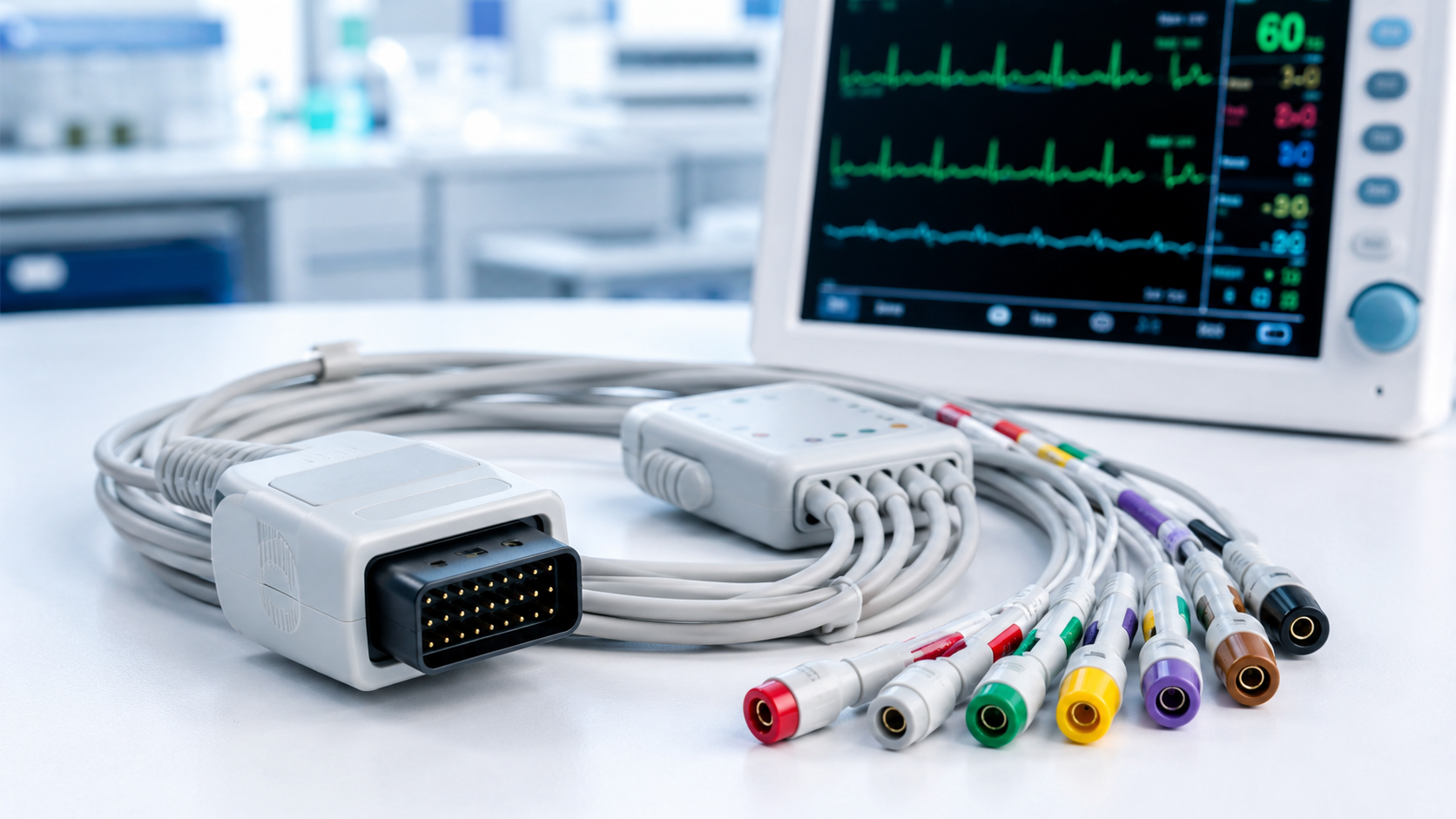
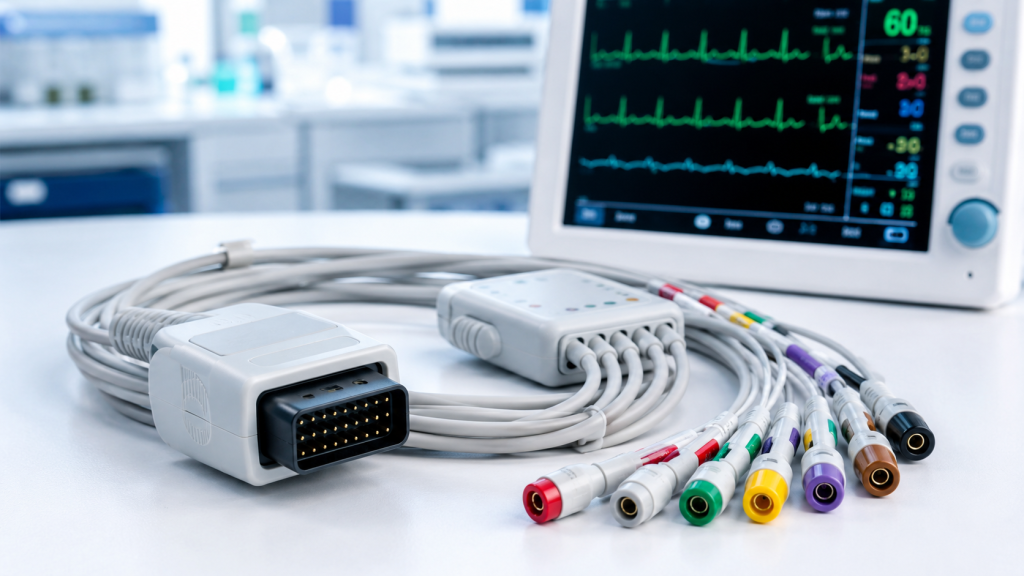
An ECG trunk cable is the main cable assembly that connects multiple ECG leadwires to a patient monitor or ECG device.
The trunk cable collects electrical signals from electrodes through individual leadwires and transfers them to the monitoring system through the device connector.
Depending on the application, ECG trunk cables can be designed for:
3-lead ECG monitoring
5-lead ECG monitoring
6-lead ECG systems
12-lead diagnostic ECG equipment
A medical-grade trunk cable usually includes:
Main cable assembly
Device-side connector
Leadwire interface
Shielding layer
Strain relief structure
Protective jacket materials
For companies developing or sourcing medical equipment accessories, selecting a professional ECG trunk cable manufacturer is essential to ensure consistent electrical performance and product reliability.
Key Factors When Selecting an ECG Trunk Cable Supplier
1. Signal Quality and Cable Design
ECG signals are low-voltage biological signals that can easily be affected by external interference.
A well-designed cable assembly should consider:
Low electrical resistance
Stable conductivity
Effective shielding
Reliable connector contact
Reduced motion noise
In clinical environments, especially ICU, emergency, and long-term monitoring applications, stable signal transmission is critical.
A professional manufacturer should understand both electrical requirements and real-world medical usage conditions.
2. Customization Capability for Medical Devices
Medical device companies often require customized cable solutions rather than standard products.
Different devices may require:
Specific connector types
Customized cable lengths
Different lead configurations
Special jacket materials
Private labeling
OEM packaging
Working with an experienced supplier that provides custom ECG trunk cable solutions allows manufacturers to develop products that match their equipment requirements.
3. Durability and Clinical Reliability
ECG cables are used repeatedly in hospitals and healthcare facilities.
During daily operation, cables may experience:
Frequent bending
Repeated connection cycles
Cleaning and disinfection
Mechanical stress
Therefore, cable construction should include durable materials and reinforced structures to improve service life.
Important design considerations include:
Flexible cable materials
Strong strain relief
Secure connectors
Consistent manufacturing quality
ECG Trunk Cable Applications
ECG trunk cables are widely used in various medical monitoring environments.
Patient Monitoring Systems
Hospitals use ECG trunk cables with bedside monitors, transport monitors, and multi-parameter monitoring systems.
Reliable cable assemblies help maintain continuous ECG monitoring for patients in:
ICU
Emergency departments
General wards
Operating rooms
Diagnostic ECG Equipment
Diagnostic ECG systems require accurate signal acquisition for clinical evaluation.
Multi-lead trunk cable assemblies support reliable connections between patient electrodes and ECG devices.
OEM Medical Equipment Development
Medical device manufacturers often integrate customized ECG cable assemblies into their products.
OEM projects may require:
Different connector solutions
Customized electrical specifications
Production scalability
Quality documentation
A capable medical cable supplier can support the entire process from prototype development to mass production.
ECG Trunk Cable and ECG Leadwire: Understanding the Difference
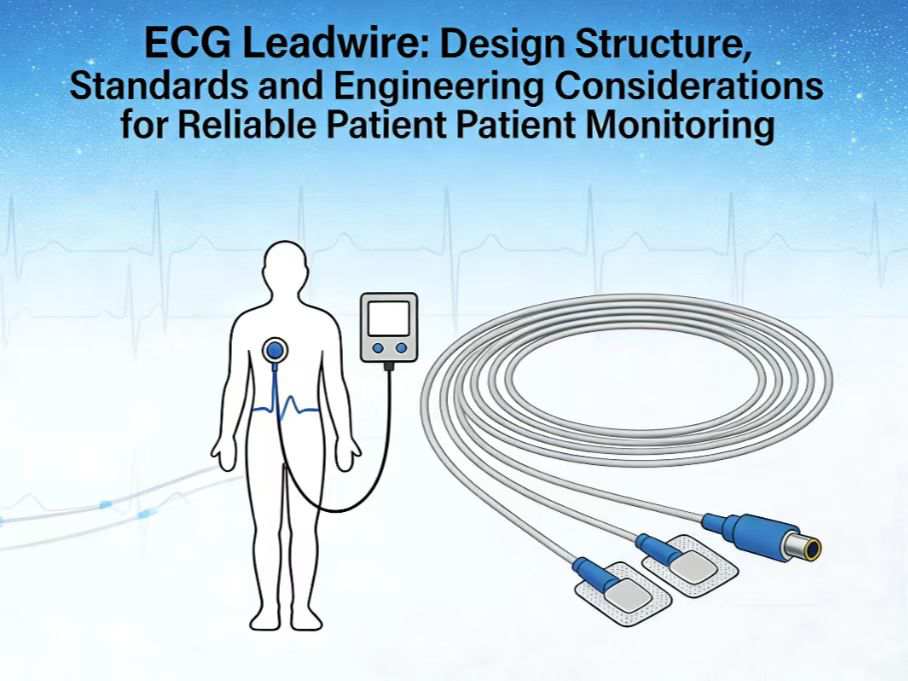
Although ECG trunk cables and leadwires are commonly used together, they perform different functions.
Component
Main Function
ECG Leadwire
Connects patient electrodes to the cable system
ECG Trunk Cable
Connects multiple leadwires to the monitoring device
Both components work together to create a complete ECG cable assembly solution.
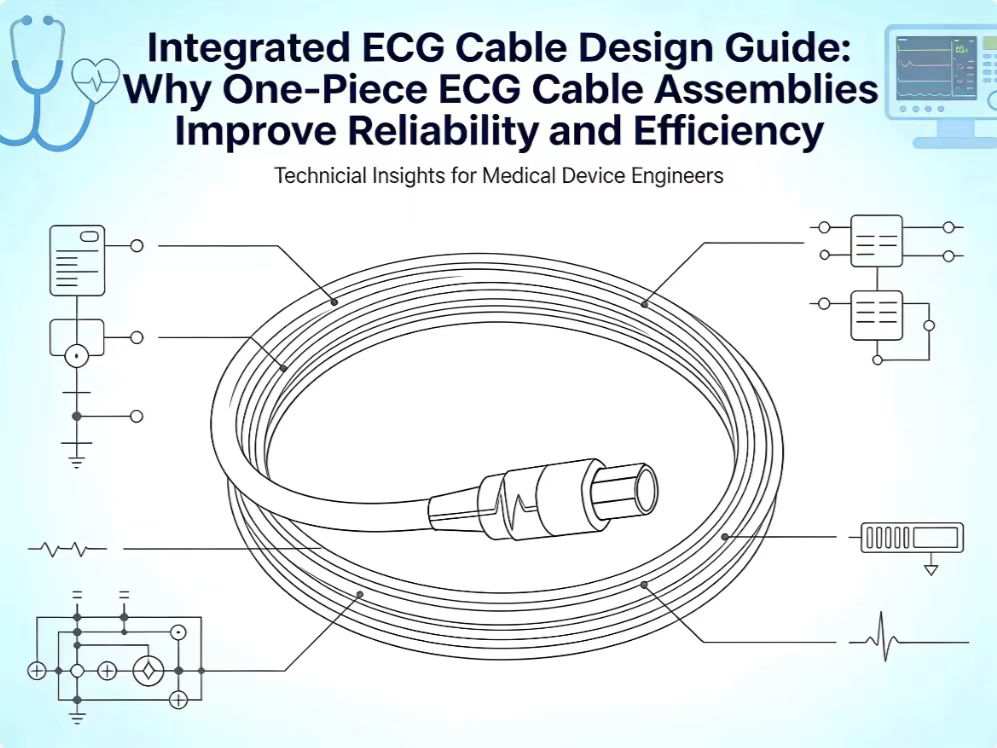
For applications requiring complete patient-side connections, manufacturers may also evaluate integrated ECG cable designs and customized leadwire assemblies.
Why Choose a Professional Medical Cable Manufacturer?
Medical cable production requires more than standard cable manufacturing experience.
A professional supplier should have:
Medical industry experience
Strict quality control processes
Electrical testing capability
Custom engineering support
Stable production capacity
For global medical device companies, working with an experienced partner can reduce development risks and improve supply chain stability.
JYCMED provides customized medical cable assembly solutions, including ECG trunk cables, ECG leadwires, and other patient monitoring cable products for OEM and ODM applications.
Explore our ECG trunk cable manufacturer solutions:
Frequently Asked Questions
What is an ECG trunk cable used for?
An ECG trunk cable connects multiple ECG leadwires to monitoring equipment and transfers cardiac signals from patient electrodes to the device.
Can ECG trunk cables be customized?
Yes. ECG trunk cables can be customized according to connector type, cable length, lead configuration, materials, and OEM requirements.
How do I choose an ECG cable supplier?
Medical device companies should evaluate supplier experience, customization capability, manufacturing quality, testing processes, and production reliability.
Are ECG trunk cables used for OEM medical devices?
Yes. Many medical equipment manufacturers require customized ECG cable assemblies designed for specific monitoring systems.
Conclusion
Selecting the right ECG trunk cable manufacturer is important for ensuring stable signal transmission, product durability, and long-term device performance.
For medical device companies, a reliable OEM partner can provide customized cable solutions that meet technical requirements while supporting future product development.